Airbnb Profit Margin: How to Calculate and Improve It
Airbnb profit margin is the percentage of rental revenue left after operating expenses. Profitability depends on both revenue and costs. Cleaning, utilities, management, repairs, and platform fees can rise faster than booking income.
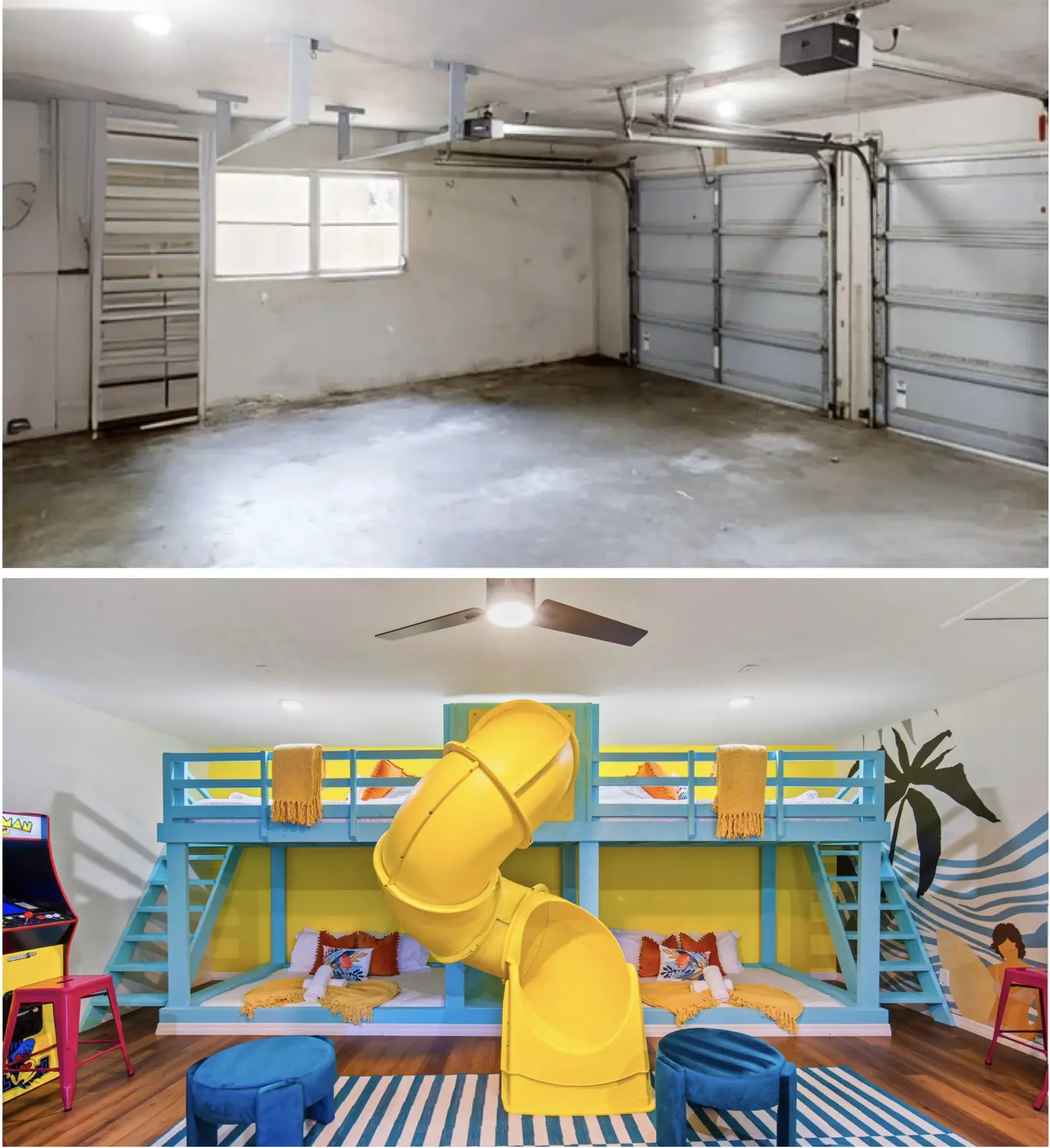
Calculate the current margin first. Then estimate how pricing, cost controls, and physical improvements would change annual profit. STR Cribs evaluates renovations that may support higher nightly rates, improve listing conversion, or reduce operating costs. Each recommendation should state its cost, estimated annual revenue or cost change, and payback period.

Build a data-backed plan for a more profitable short-term rental.
- Only Licensed STR-Specific GC
- 500+ Projects in 20+ States
- Financing Up to $150K, 0% APR
Airbnb Profit Margin Formula
For a defined period, calculate the margin with this formula:
If a property earns $90,000 in rental revenue and incurs $63,000 in operating expenses, its operating profit is $27,000. Divide $27,000 by $90,000 to get a 30% operating profit margin.
| Calculation | Amount |
|---|---|
| Rental revenue | $90,000 |
| Operating expenses | − $63,000 |
| Operating profit | $27,000 |
| Operating profit margin | 30% |
Use the same account categories every month so the results remain comparable. For example, including mortgage interest, owner labor, or capital improvements in only some periods distorts the trend.
Airbnb Revenue Included in the Calculation
Record all revenue earned by the property. Do not treat the host payout as total revenue because Airbnb may deduct fees, adjustments, and co-host allocations before sending it.
- Nightly revenue: the accommodation price earned for occupied nights.
- Cleaning fees collected: include these as revenue when the related cleaning expense is also counted.
- Extra guest and pet fees: include charges retained by the host.
- Ancillary revenue: include approved early check-in, late checkout, equipment rental, or other property-related income.
- Refunds and discounts: subtract concessions that reduce the amount earned.
Airbnb explains that a host payout starts with the nightly price and optional charges, then subtracts items such as the host service fee and co-host payouts. Reconcile the property’s booking records with the platform’s host payout calculation before comparing performance.
Airbnb Expenses Included in the Calculation
Include every recurring cost required to operate the rental. Small omitted expenses overstate the margin, especially when they occur on every reservation or occupied night.
| Expense group | Typical items |
|---|---|
| Booking costs | Platform fees, payment processing, refunds, and channel commissions |
| Turnover | Cleaning labor, laundry, linens, toiletries, and replenishment |
| Property operations | Utilities, internet, landscaping, pool or hot tub service, pest control, and security |
| Guest support | Property management, co-host fees, software, and after-hours support |
| Maintenance | Repairs, preventive service, furniture replacement, and appliance upkeep |
| Ownership | Insurance, permits, licenses, property taxes, and HOA dues |
Keep capital improvements separate from routine operating costs when evaluating day-to-day performance. Measure a renovation over its expected useful life instead of charging the full cost to one operating period. Ask a qualified tax professional how to classify and depreciate the work for a specific property.
Gross Margin and Net Margin Differences
Hosts often use “profit margin” to mean different things. Define the version before comparing properties.
- Gross operating margin: revenue minus direct booking and turnover costs. This helps evaluate the economics of each stay.
- Operating profit margin: revenue minus recurring property operating costs. This shows how efficiently the rental performs before owner-specific tax treatment.
- Net profit margin: the amount left after all included expenses, which may include financing, depreciation, and taxes depending on the analysis.
Use operating profit margin to compare the same property across reporting periods. Use net margin to assess the owner’s return after financing, depreciation, and taxes. Debt terms, tax treatment, and ownership structure can produce different net margins for the same rental.

No Universal Airbnb Profit Margin
There is no single healthy margin that applies to every Airbnb. A self-managed urban apartment, a financed beach house, and a staffed luxury estate have different cost structures. Seasonality, local labor, insurance, property taxes, utility rates, guest capacity, and management model can all change the result.
Use three comparisons instead of relying on a generic benchmark:
- The property’s prior periods: compare trailing twelve-month results and the same season in earlier years.
- A realistic underwriting model: compare actual revenue and costs with the assumptions used to acquire or renovate the property.
- Comparable rentals: compare rate, occupancy, amenities, capacity, and guest experience with listings serving the same traveler and market.
Review setup costs and deferred maintenance before interpreting the result. Setup costs can temporarily reduce the margin of a new listing. Deferred maintenance can temporarily increase a mature property’s margin. The next spending decision should account for both timing effects.
Airbnb Margin Improvement Priorities
Use the operating data to locate the main source of lost profit. Low listing conversion, discounted rates, frequent turnovers, high utility use, and recurring replacement costs require different responses.
Fix Pricing and Availability
Review nightly rates, minimum stays, orphan nights, discounts, and blocked dates before paying for physical changes. Measure average daily rate, occupancy, revenue per available night, and average length of stay together. Raising occupancy through deep discounts can reduce profit when every additional reservation creates another turnover.
When page views do not produce bookings, review pricing, photographs, reviews, and listing details before adding guest capacity. These changes may help increase Airbnb bookings. Track the resulting revenue and operating costs to determine whether profit also improved.
Control Turnover and Replacement Costs
Track cleaning, laundry, consumables, damage, and replacement cost per occupied night and per reservation. Longer average stays may reduce turnover frequency, while durable materials and standardized replacement items can reduce emergency purchasing.
- Use washable performance fabrics in high-contact rooms.
- Standardize sheets, towels, lamps, hardware, and dining pieces.
- Keep model numbers and finish details in a replacement log.
- Schedule preventive service before peak season.
- Separate owner-use costs from guest operating costs.
Improve Guest Capacity Carefully
A legal additional sleeping position may expand the booking audience only when the property can serve the added guests. Check seating, dining space, bathrooms, parking, egress, HVAC, hot water, and local occupancy rules before changing the advertised capacity.
Model the change with conservative assumptions. Estimate the added nightly revenue, occupancy change, cleaning and utility costs, furnishing cost, and maintenance. Reject a capacity increase if the property lacks adequate circulation, seating, bathrooms, parking, or building systems for the proposed guest count.
Invest in High-Value Amenities
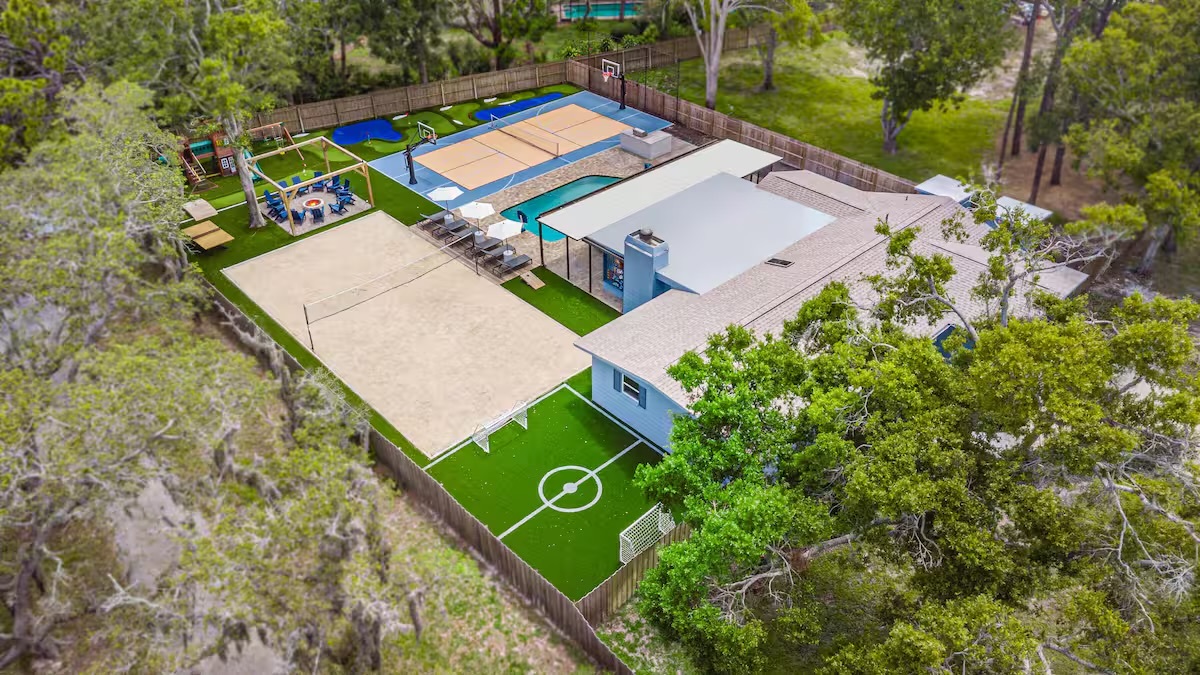
Evaluate an amenity against competing listings in the same market. Compare rates, availability, review language, and guest profiles for properties with and without the feature. Approve a hot tub, game room, workstation, EV charger, or outdoor dining area only when the comparison supports a specific rate, occupancy, or conversion assumption.
Calculate the annual contribution to profit before approving an amenity. Include installation, financing, insurance, utilities, service, downtime, and replacement reserves. For example, an amenity that adds $8,000 in annual revenue and $6,500 in annual costs contributes $1,500 before tax.

Upgrade Design and Photography
Design affects margin through measurable changes in booking conversion, nightly rate, replacement frequency, or turnover labor. Define the intended result for each room before selecting finishes or furniture.
Prioritize the spaces that appear first in the listing or determine guest capacity: the lead image, living room, primary bedroom, kitchen, outdoor gathering area, and signature amenity. Select durable materials that remain consistent in person and in photographs and that can be replaced without redesigning the room. Airbnb staging should show the finished layout and sleeping arrangements accurately.
Airbnb Upgrade ROI Formula
Profit margin measures operating efficiency for a reporting period. Project ROI measures the annual incremental profit from a specific investment as a percentage of its cost. Use both metrics because a property-wide margin cannot isolate the result of one renovation.
Base the calculation on incremental profit. If a $20,000 project adds $12,000 in annual revenue and requires $3,000 in added annual cleaning, utilities, service, and replacement reserve, the annual incremental profit is $9,000. The simple annual ROI is 45%, and the simple payback period is about 2.2 years.
| Calculation | Amount |
|---|---|
| Annual incremental revenue | $12,000 |
| Additional annual operating costs | − $3,000 |
| Annual incremental profit | $9,000 |
| Total project cost | $20,000 |
| Simple annual ROI | 45% |
| Simple payback period | 2.2 years |
Use a range of conservative, expected, and optimistic outcomes. Include construction downtime and limit the forecast to the project’s expected useful life. Use the Airbnb design ROI framework to estimate how layout, furnishings, amenities, and photography may change revenue or operating costs.
Monthly Airbnb Profitability Dashboard
Track the same operating figures every month and calculate trailing twelve-month totals. Compare each figure with the prior month, the same month last year, and the underwriting target. This separates seasonal variation from a sustained change in performance.
- Rental revenue and host payout
- Average daily rate and occupancy
- Revenue per available night
- Average length of stay
- Cleaning and laundry cost per reservation
- Utilities and maintenance per occupied night
- Platform and management fees as a percentage of revenue
- Operating profit and operating profit margin
- Capital spending and project ROI, tracked separately
Add the dates of rate changes, major repairs, amenity launches, photography updates, and listing edits to the monthly record. These notes help connect changes in the figures to specific operating decisions.
Airbnb Profit Margin Mistakes
- Using payout as profit: the platform deposit does not account for every property expense.
- Ignoring owner labor: self-management still consumes time, even when no management invoice exists.
- Mixing capital and operating costs: this obscures both day-to-day margin and project ROI.
- Comparing unmatched periods: a peak-season month and an off-season month answer different questions.
- Counting revenue without added costs: more guests and more bookings can increase cleaning, utilities, wear, and support.
- Using unverified averages: market, financing, tax, and service models make universal margin claims unreliable.
- Funding design without a hypothesis: every upgrade should target rate, occupancy, capacity, conversion, durability, or operating efficiency.
Airbnb Profit Margin FAQs
What Is a Good Airbnb Profit Margin?
A target margin should cover recurring costs, planned reserves, and the owner’s required return. Set the target from the property’s underwriting and update it with actual results. Compare performance with prior periods and local rentals that serve the same guest segment.
How Often Should Hosts Calculate Margin?
Calculate operating profit margin monthly and review trailing twelve-month performance. Recalculate an investment case before a major renovation, amenity addition, refinancing, or management change.
Should Mortgage Payments Count as Expenses?
For cash-flow planning, include the actual debt payment. For property operating comparisons, calculate margin before debt service. Then calculate owner cash flow after the debt payment. Interest and principal receive different accounting and tax treatment, so use a consistent method and qualified advice.
Can Higher Occupancy Reduce Profit?
Yes. Discounted short stays can add cleaning, laundry, utilities, supplies, support, and wear faster than they add contribution profit. Track profit per reservation and per available night alongside occupancy.
Which Airbnb Upgrade Improves Margin First?
Choose the first upgrade from the measured source of lost profit. Depending on the data, the appropriate change may be new photography, a revised layout, more durable furnishings, an amenity supported by local demand, or an operational correction. Estimate the revenue or cost effect before approving the expense.
Build a Defensible Airbnb Profit Plan
Reconcile booking revenue, host payouts, and operating expenses for the same reporting period. Calculate operating margin with the same account categories each month. Rank proposed changes by annual incremental profit, implementation cost, and payback period.
Approve a physical improvement when the operating data supports its revenue or cost assumptions. After completion, compare the actual change in rate, occupancy, turnover cost, maintenance, or replacement expense with the estimate. Use the result to refine the next investment decision.