Pet-Friendly Airbnb Setup: Essentials, Fees, and Rules
A pet-friendly Airbnb succeeds when the property, policy, and turnover process all support the same promise. Start with cleanable surfaces, a controlled outdoor route, a small set of useful supplies, and rules that guests can follow without interpretation. Those choices protect the home while making the stay easier for people traveling with pets.
This guide explains which Airbnb pet essentials matter, how to set an Airbnb pet fee, what to include in an Airbnb pet policy, and how to prepare the property for reliable turnovers. The goal is not to add novelty items. It is to create a practical operating system that works for guests, cleaners, and owners.
Should You Make Your Airbnb Pet-Friendly?
Pet-friendly positioning can expand the bookable audience. Evaluate the property and operating model before changing the policy. The American Pet Products Association reported that 94 million U.S. households owned at least one pet in 2024. That is a large travel segment, yet demand alone does not justify a policy change.
Review the physical and operating constraints first. A pet-friendly Airbnb is easier to manage when it has durable floors, a short route from the door to an outdoor relief area, enough storage for cleaning supplies, and a housekeeping team prepared for hair and odor removal. Confirm any restrictions imposed by the building, homeowners association, insurer, or local rules before changing the listing.
Use a property-fit checklist
- Surfaces: Can floors, upholstery, rugs, and bedding tolerate more frequent spot cleaning?
- Outdoor access: Is there a safe route to an appropriate relief area?
- Noise exposure: Would barking create a serious neighbor or shared-wall problem?
- Turnover capacity: Can the cleaner inspect under furniture, remove hair, and treat odor within the normal schedule?
- Rules: Do insurance, lease, association, and local requirements permit pets?
If two or more of these conditions are unresolved, correct the operating gap before advertising the home as pet-friendly.
Airbnb Pet Essentials Checklist
Provide supplies that prevent common messes and reduce guest uncertainty. Everything should be washable, easy to replace, and stored where a guest would naturally use it.
| Priority | Supply | Operating purpose |
|---|---|---|
| Required | Two stainless steel bowls and a silicone mat | Contains food and water in one cleanable location |
| Required | Waste bags and a lidded outdoor bin | Makes prompt yard cleanup easy |
| Required | Dark pet towels and an absorbent door mat | Stops wet paws before they reach rugs and upholstery |
| Required | Enzyme cleaner, paper towels, and disposable gloves | Allows immediate treatment of accidents |
| Useful | Washable bed cover or pet bed | Creates a defined resting place |
| Useful | Washable furniture throws | Protects the highest-use seating |
| Property-specific | Baby gate or portable pen | Blocks unsafe rooms or stairs when the layout requires it |
Place supplies where the mess begins
Build a pet station beside the door guests will use after walks. Store towels, bags, a brush, and the cleaner there instead of spreading supplies through the house. Put bowls on a waterproof mat away from wood cabinets and primary walkways. A labeled basket is enough; custom cabinetry is optional.
Avoid supplies that create new risk
Skip open treat jars unless every package remains sealed and ingredient information is available. Remove damaged toys between stays, and do not provide rawhide or anything that can splinter. A tie-out is not a substitute for a secure fence or guest supervision. Keep cleaning chemicals out of reach and follow each product label.
Pet-Proofing an Airbnb Without Making It Feel Clinical
Pet-proofing should reduce cleaning time and replacement risk without making the property look temporary. The same choices that improve durability can also produce a more consistent guest experience.
Choose hard, repairable surfaces
Luxury vinyl plank, porcelain tile, and properly sealed hard flooring are easier to inspect and clean than wall-to-wall carpet. Use washable, low-pile rugs where softness or sound control is needed. Avoid delicate looped rugs that can catch claws, and keep spare flooring from the original installation for future repairs.
Specify upholstery for turnover work
Use performance fabric with documented cleaning instructions, removable cushion covers when available, and a weave that releases hair. Before purchasing, give the housekeeping team the manufacturer care guide. A material is not operationally durable if the approved cleaning method does not fit the turnover window.
Design a controlled arrival route
The best pet zone is a sequence rather than a themed corner: outdoor relief area, entry mat, towel storage, then durable flooring. Keep fragile decor and light upholstery away from that route. Closed storage prevents bowls, leashes, and cleaning products from becoming visual clutter in listing photos.
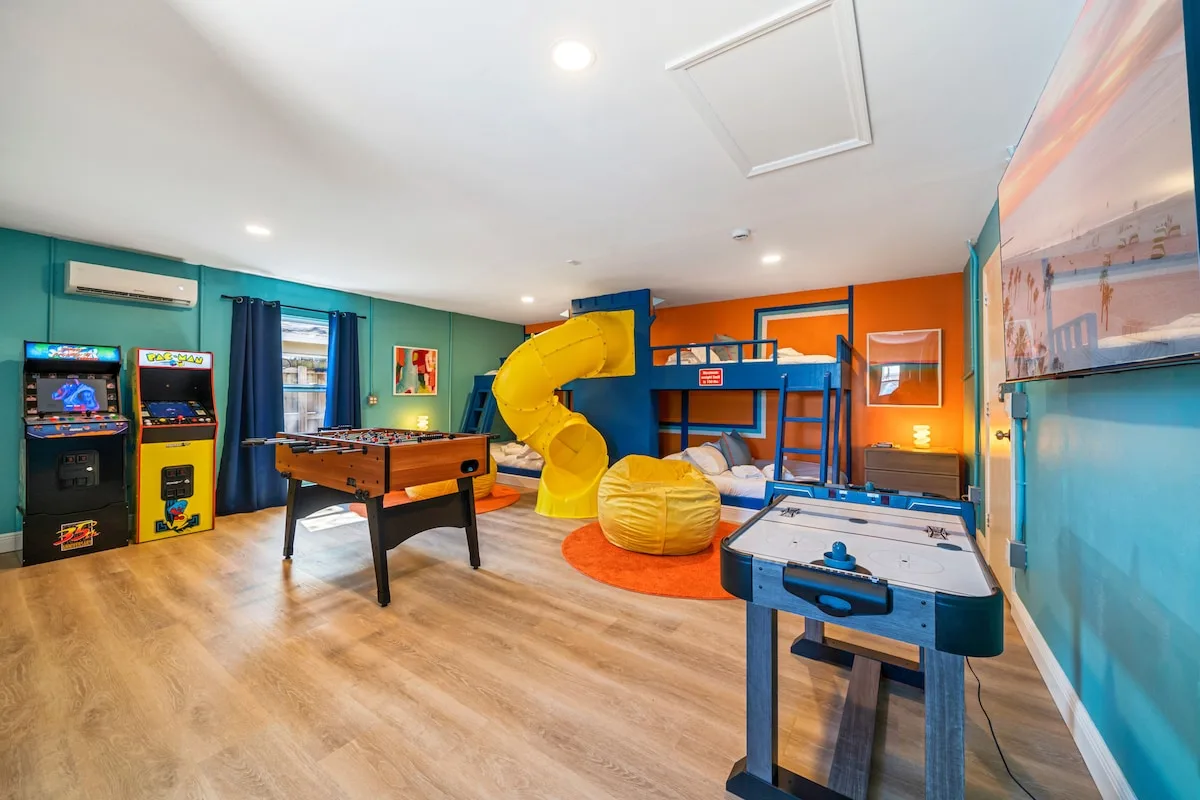

Build a durable, guest-ready plan for your short-term rental.
- Design, furnishing, renovation, and installation
- A property-specific scope based on guest capacity and operations
Airbnb Pet Policy Rules Guests Can Follow
Write the pet policy in short, observable rules. Avoid broad language such as “be respectful” when the real requirement is to pick up waste, prevent nuisance barking, or keep animals out of the pool. Put the same rules in the listing, booking message, and house guide so guests do not receive conflicting instructions.
- All pets must be included in the reservation or approved before arrival.
- State the maximum number of pets and any limits permitted by applicable law and platform policy.
- Pets must be supervised or safely contained when left alone, if leaving them alone is allowed.
- Waste must be collected immediately and placed in the designated bin.
- Guests must report accidents or damage promptly so the area can be treated.
- State whether pets may use furniture, beds, the pool area, or fenced outdoor spaces.
- Explain quiet-hour and nuisance-barking expectations.
Do not copy a generic policy without checking local law and your insurance terms. If the property has a pool, stairs, wildlife exposure, an unfenced yard, or shared access, name that condition directly in the pre-arrival message.
Service animals are not pets
Airbnb’s Accessibility Policy states that service animals are not pets. Hosts generally may not refuse a reservation, charge a pet fee, or apply different treatment because of a service animal, subject to the policy and limited exceptions. Emotional support animal requirements can vary by location. Review the current policy and applicable law rather than applying the ordinary pet rules automatically.
How to Set an Airbnb Pet Fee
A pet fee should recover predictable operating cost, not act as a penalty. Airbnb currently allows a fee per booking, per night, per pet, or per pet per night. Its pet fee guidance says the fee cannot exceed the nightly base price and that service animals stay free.
| Fee model | Works best when | Watch for |
|---|---|---|
| Per booking | Turnover cost changes little with stay length | Long stays may create more cleaning than the fee covers |
| Per night | Hair, supplies, and wear rise with stay length | The total can become uncompetitive on longer stays |
| Per pet | Each additional animal adds meaningful reset work | The fee must remain clear in the booking total |
| Per pet per night | Both pet count and stay length materially affect cost | This is the most complex and can produce a high total |
Calculate the fee from actual turnover cost
Ask the cleaner to price the tasks that differ after a pet stay: hair removal, upholstery inspection, yard inspection, odor treatment, and laundering protective covers. Add the average replacement cost of consumable supplies. Compare that total with nearby pet-friendly listings before selecting the structure.
Review the fee after several pet stays. If the process repeatedly costs more than expected, identify the task causing the variance before raising the fee. Better entry mats, washable covers, clearer rules, or a different cleaner checklist may solve the underlying problem.
Pet-Friendly Turnover and Damage Workflow
Give cleaners a separate pet-stay checklist instead of relying on memory. Record the pet count in the turnover notes and allow enough time for the tasks the property actually requires.
- Inspect before cleaning: Photograph any new stain, scratch, broken item, or yard damage before moving objects.
- Remove hair from high and low surfaces: Check under beds, sofa cushions, baseboards, fabric headboards, and HVAC returns.
- Treat accidents at the source: Use the approved product and process for the affected material. Masking odor is not remediation.
- Launder pet-use textiles separately: Wash towels, throws, and removable bed covers according to their care labels.
- Inspect the outdoor route: Check gates, waste, digging, landscaping, screens, and door surfaces.
- Reset and document: Restock supplies and report recurring issues that require a design or policy change.
Airbnb distinguishes expected cleaning from unexpected damage. Its host guidance directs eligible damage requests through the Resolution Center and Host Damage Protection process. Keep dated photographs, invoices, messages, and repair estimates when a claim is necessary.
How to Present a Pet-Friendly Airbnb Listing
Add “pet-friendly” only when guests can quickly find the fee, limits, outdoor conditions, and relevant house rules. Photograph the practical features: the fenced area or relief route, bowl station, entry setup, washable bed, and any gate. Do not imply that a yard is secure unless its entire perimeter has been inspected.
The pet section should answer four questions before booking: how many pets are allowed, what the fee is, where pets may go, and what guests must do during the stay. The broader listing should still lead with the property’s strongest guest benefits. Pet access is one feature, not the entire Airbnb guest experience.
After booking, send a short confirmation that repeats the pet count and asks only for information needed to prepare the stay. Include the closest relief area, waste location, house rules, and emergency veterinary contact in the digital guide. A complete Airbnb welcome setup can include the pet station without replacing essentials for human guests.
Pet-Friendly Airbnb FAQs
What should I provide in a pet-friendly Airbnb?
Start with two washable bowls, a waterproof mat, waste bags, dark pet towels, an absorbent entry mat, enzyme cleaner, disposable gloves, and a clearly marked outdoor waste bin. Add a washable bed cover or furniture throw only if the housekeeping process can reset it reliably.
How much should an Airbnb pet fee be?
Base the fee on added cleaning labor, laundry, supplies, and expected minor replacement cost, then compare the total with nearby listings. Airbnb permits several fee structures and caps the pet fee at the nightly base price. The most appropriate amount depends on the property and turnover cost.
Can an Airbnb host charge a fee for a service animal?
Airbnb says service animals are not pets and generally cannot be charged a pet fee. Review Airbnb’s current Accessibility Policy and applicable law for the reservation location.
Should pets be allowed on furniture?
Either approach can work if it is explicit and enforceable. A no-furniture rule needs a comfortable alternative and may still require washable protection for accidental use. If furniture access is allowed, specify which pieces are permitted and use covers the cleaner can remove and launder.
What is the most important pet-proofing upgrade?
For many properties, the highest-value upgrade is a controlled arrival route with an absorbent mat, pet towels, cleanable flooring, and direct access to the outdoor relief area. It prevents dirt and water from spreading through the home and simplifies the reset.
Build the System Before Changing the Listing
A successful pet-friendly Airbnb is supported by repeatable operations. Confirm that the property is suitable, install durable materials where they matter, place essential supplies at the point of use, write observable rules, and calculate the fee from real costs. Then test the turnover checklist and update it when recurring problems reveal a design or communication gap.
That preparation gives pet owners a clear, useful stay while protecting the property from avoidable wear. It also creates a listing promise the team can deliver consistently instead of relying on extra cleaning after each reservation.